

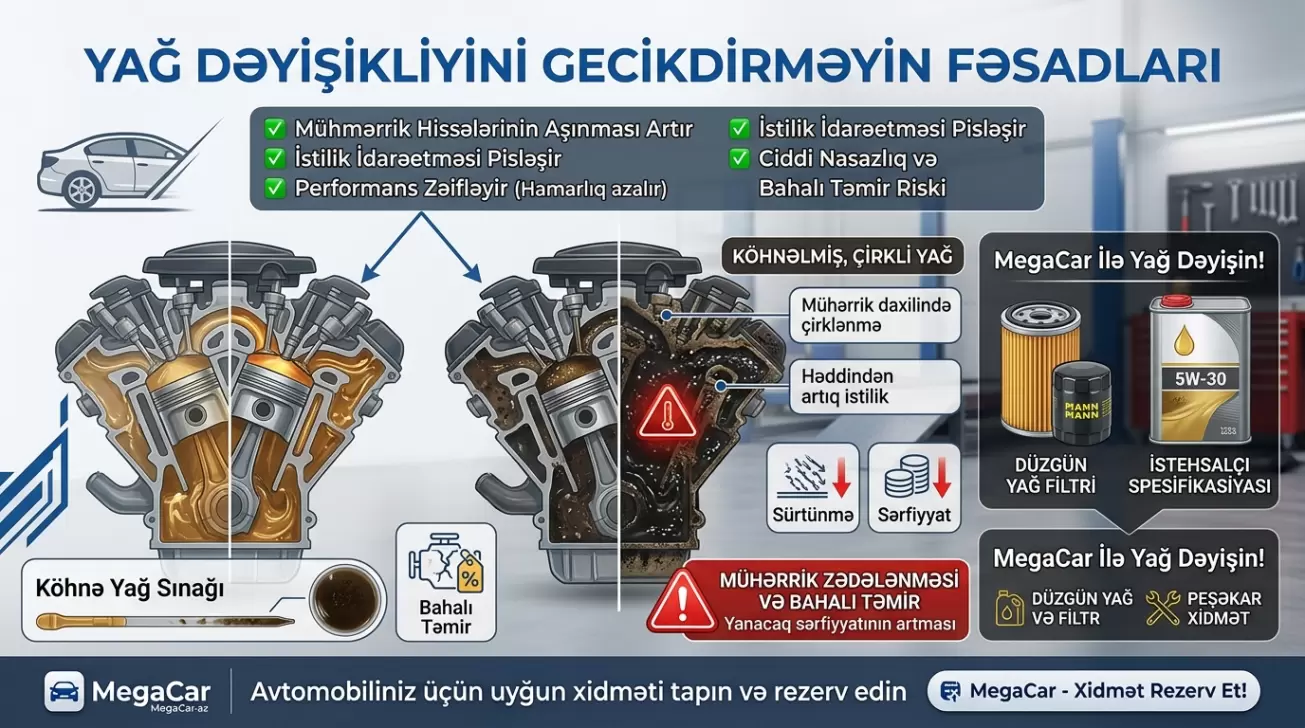
Regular engine oil changes are one of the most important parts of vehicle maintenance. Engine oil helps lubricate moving engine components, reduce friction, and assist in managing heat inside the engine.
However, as oil is used over time, it becomes contaminated, oxidizes, and gradually loses its original properties. Delaying an oil change beyond the recommended interval can negatively affect engine operation and the condition of its components.
Why Does Old Engine Oil Become a Problem?
During operation, engine oil is exposed to high temperatures and gradually loses some of its protective and lubricating properties. Wear particles and other contaminants can also accumulate in the oil.
As a result, moving engine components may not receive the same level of protection, particularly when the vehicle is operated for a long period without an oil change.
Main Consequences of Delaying an Oil Change
Increased Engine Component Wear
One of the main functions of engine oil is to reduce friction between moving metal components. As oil ages, its lubricating properties can deteriorate.
This can increase component wear and potentially reduce the service life of engine parts.
Heat Management May Become Less Effective
Engine oil does more than lubricate components. It also helps transfer heat away from certain engine parts. When the properties of the oil deteriorate, this can negatively affect the engine's normal operating temperature.
Engine Performance May Decrease
Old or contaminated engine oil can affect normal engine operation. The driver may notice that the engine runs less smoothly, its sound has changed, or overall performance has decreased.
In some cases, fuel consumption may also increase. However, increased fuel consumption can have many different causes, so proper diagnostics are necessary to identify the actual problem.
Increased Risk of Serious Engine Problems and Expensive Repairs
Operating a vehicle for too long without changing the engine oil can contribute to excessive wear of engine components. If the problem is not identified in time, more serious and expensive repairs may eventually be required.
When Should Engine Oil Be Changed?
The recommended oil-change interval depends on the vehicle's make and model, engine type, oil specification, and operating conditions. Therefore, it is important to follow the vehicle manufacturer's recommendations and the specifications of the engine oil being used.
If a vehicle is frequently driven in heavy traffic, used mainly for short trips, or operated under demanding conditions, particular attention should be paid to the recommended maintenance schedule.
What Should You Consider When Changing Engine Oil?
When changing the oil, it is important not only to do it on time but also to select the correct oil for the specific vehicle. The oil's viscosity and compliance with the manufacturer's specifications should be taken into account.
The oil filter should also be inspected and replaced when required according to the vehicle manufacturer's maintenance requirements.
Find an Oil Change Service with MegaCar
If it is time to change your engine oil, you can use the MegaCar platform to find a suitable service.
With MegaCar, you can find an appropriate oil change service, review available service and branch options, choose a convenient time, and make a reservation.
Find the service your vehicle needs and book it — MegaCar.