

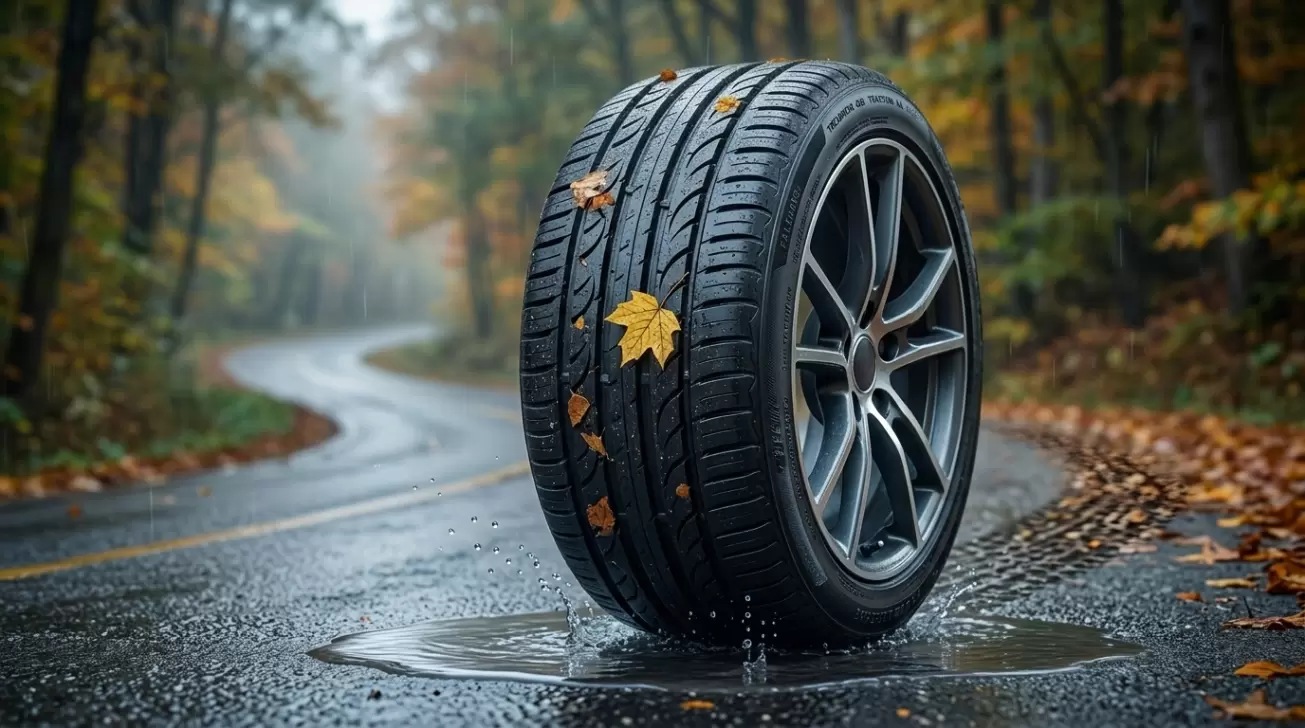
During the autumn months, increased rainfall, wet roads, and lower temperatures directly affect a vehicle's road grip. In such conditions, the condition of the tires plays an important role in driving safety. In particular, tire tread (tread) is one of the main parts responsible for maintaining the necessary contact between the vehicle and the road.
When the tread depth or overall condition of the tire is inadequate, controlling the vehicle on wet roads can become more difficult, braking distance may increase, and the risk of skidding may rise.
What is tire tread?
Tire tread is the patterned outer surface of a tire that comes into contact with the road. The grooves and tread blocks not only help maintain proper contact between the tire and the road surface, but also help channel water away from underneath the tire.
When a layer of water forms between the tire and asphalt on a wet road, the tread grooves help remove that water. This allows the tire to maintain better contact with the road surface.
Why is tread especially important in autumn?
During the summer months, tire grip on dry asphalt is generally more stable. In autumn, however, conditions change due to rain and wet roads.
When the tire tread has sufficient depth and is in good condition:
-
water is removed more effectively from underneath the tire;
-
grip on wet roads improves;
-
the risk of skidding is reduced;
-
vehicle control during braking becomes more stable;
-
steering response becomes more predictable.
As the tread wears down, its ability to channel water away through the grooves decreases. As a result, the vehicle may lose grip more easily on wet roads.
What happens when tread depth decreases?
Tire tread gradually wears down during use. As the tread depth decreases, the tire's ability to channel water through the grooves also becomes weaker.
This is especially important during heavy rain. Water remaining between the vehicle's tires and the asphalt can increase the risk of aquaplaning (aquaplaning).
During aquaplaning, a tire may partially or completely lose the necessary contact with the road surface. In this situation, steering response may become weaker and maintaining control over the vehicle's direction can become more difficult.
How can you check the condition of the tread?
It is not correct to assess tires only by their tread depth. Their overall condition should also be checked.
The main points to pay attention to are:
-
Tread depth: Make sure the tread pattern is not excessively worn.
-
Evenness of wear: If one side of the tire is more worn than the other, this may be related to tire pressure, wheel alignment, or problems with the suspension system.
-
Cracks and cuts: If there are cracks, cuts, or other damage on the sidewall or tread of the tire, the tire should be inspected.
-
Tread wear indicators: Many automotive tires have tread wear indicators. If the tread has worn down to the level of these indicators, the tire should be considered for replacement.
Tire pressure should also be checked
In autumn, paying attention only to the tread is not enough. Tire pressure should also be checked regularly.
Changes in temperature can affect tire pressure. Underinflation or overinflation can change the tire's contact with the road and affect its wear pattern.
The most accurate reference is the tire pressure specified by the vehicle manufacturer. This information is usually provided on the information label inside the driver's door, on the fuel filler flap, or in the vehicle owner's manual.
When should a tire be replaced?
Tire replacement does not depend only on the degree of tread wear. The tire's age, cracks, deformation, uneven wear, and other damage should also be taken into consideration.
If significant wear, cracks, bulges, or other damage are visible on the tire, it is safer to have it inspected by a specialist before continuing to use the vehicle for an extended period.
Check your tires before autumn
During the autumn season, drivers are more likely to encounter rainy and slippery roads. Therefore, checking the condition of the tires before the season begins is an important part of preparing the vehicle for safe operation.
Check the tread condition, tire pressure, evenness of wear, and any visible damage. If you notice anything unusual, it is recommended to have the tires and vehicle suspension system inspected by a specialist.
For tire, suspension, and other automotive services, find the right service on the MegaCar platform and conveniently make a reservation.