

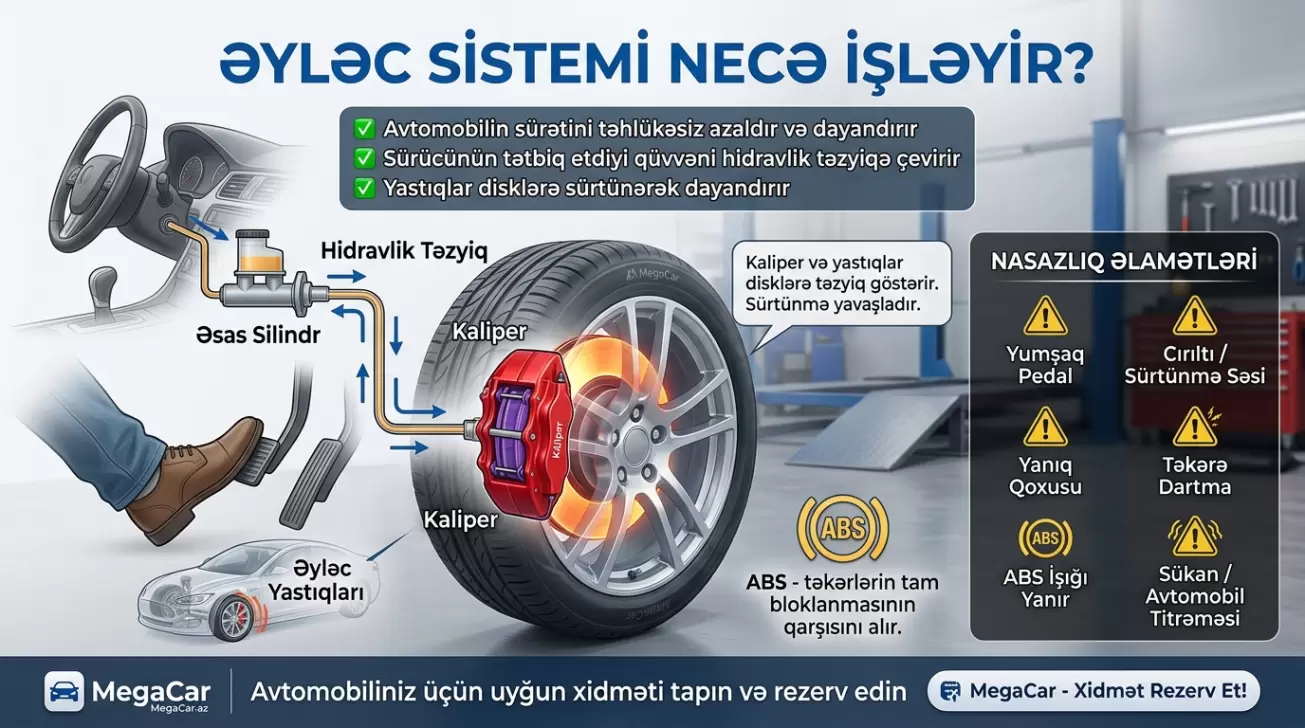
The braking system is one of the most important safety systems in a vehicle. Its main purpose is to reduce the vehicle's speed and bring it to a safe stop when necessary. Proper brake system operation is essential for the safety of the driver and other road users.
How Does the Braking System Work?
When the brake pedal is pressed, the driver's applied force is transferred to the braking system. The master cylinder creates hydraulic pressure in the brake fluid, which is then transmitted to the braking mechanisms.
The brake caliper and brake pads press against the brake disc. The resulting friction converts the vehicle's kinetic energy into heat, causing the vehicle to slow down or stop.
Modern vehicles also use electronic safety systems such as ABS (Anti-lock Braking System). ABS helps prevent the wheels from locking completely during hard braking and helps the driver maintain control of the vehicle.
Main Signs of a Brake System Problem
Brake system problems can appear in several ways:
- The brake pedal feels unusually soft or goes deeper than normal
- Squealing, grinding, or other unusual noises when braking
- A burning or sharp smell after braking
- The vehicle pulls to one side when braking
- The ABS or brake warning light comes on
- The vehicle slows down poorly despite normal or firm pressure on the brake pedal
- The braking distance becomes longer than usual
- Vibration in the steering wheel or vehicle during braking
If you notice any of these signs, it is not recommended to delay an inspection. A brake system fault can directly affect driving safety.
When Should the Braking System Be Checked?
If the vehicle behaves differently during braking, unusual noises or smells appear, or a warning light comes on, it is important to have the braking system inspected.
With the MegaCar platform, you can find a suitable auto service, choose a branch, and book a technical service for your vehicle.
Find the service your vehicle needs and book it — MegaCar.